Slab Leak Detection Cost (2026)
Professional slab leak detection costs $150–$600 in This Old House’s guide (updated April 2026, with cost data from HomeAdvisor) and $100–$400 in Fixr’s (updated May 2025), “depending on how invasive the detection needs to be.” That fee covers finding the leak, not fixing it: the repair is a separate bill, which This Old House puts at $2,300 on average. Fixr says some leaks “can be spotted in minutes, while others take over an hour” and need holes drilled, soil cleared from the foundation, or cameras run through drain lines, and the harder the search, the higher the cost.
Slab leak detection cost
| What you’re paying for | This Old House (2026) | Fixr (2025) |
|---|---|---|
| Slab leak detection | $150–$600 | $100–$400 |
| Plumber’s hourly rate | — | $45–$200 (most pay $75–$130) |
| Time for an inspection | — | 1–3 hours on average |
| Minimum labor charge on small jobs | — | about $150–$200, plus the inspection cost |
Two other guides price the visit under different names. HomeGuide (October 2025) says that if you can’t find the leak yourself, a foundation inspection costs $300–$750: a professional looks at the entire slab, finds leak entry points and determines the scope of the damage. Bob Vila (April 2024) says that once a leak is located, a plumber can inspect the property to confirm the location and diagnose the cause, and that a plumbing inspection costs $200 on average. Names and scope differ between companies, so ask exactly what the visit includes.
How plumbers find a slab leak
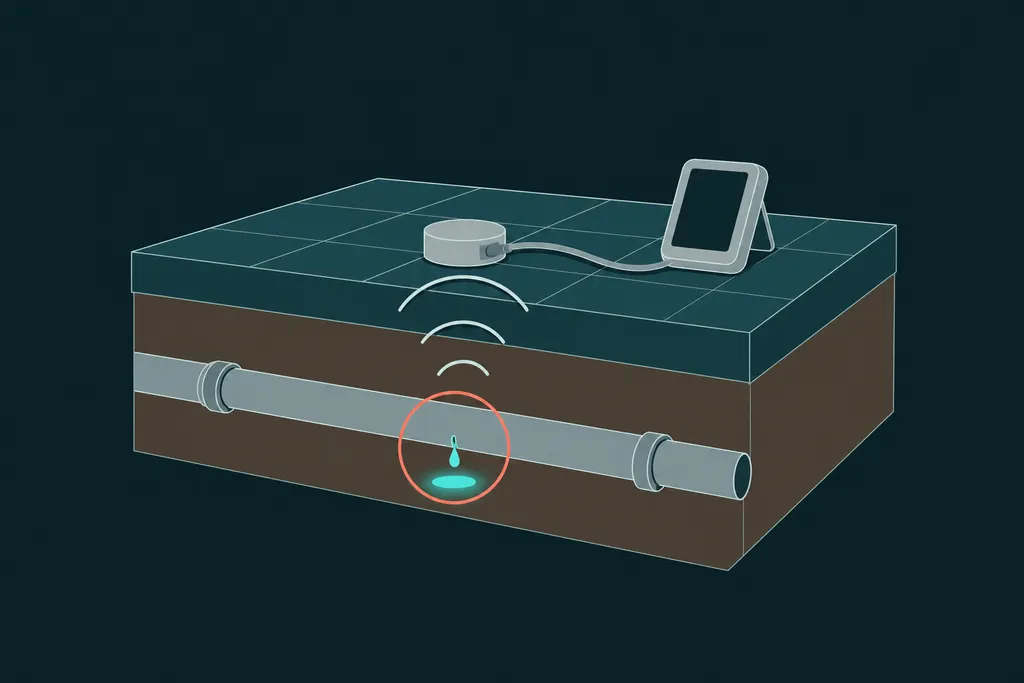
These are the methods the guides describe; which ones a plumber uses depends on the house and the leak.
- Your meter test first. Before you pay anyone, the EPA’s WaterSense check takes two hours: read the meter, use no water, read it again. “If the meter changes at all, you probably have a leak.” It tells you a leak exists, not where. The Leak Finder walks through the meter check.
- Pressure testing and a visual check. Fixr describes plumbers “testing things like water pressure in the area, examining the slab for cracks and signs of moisture, and checking the surrounding landscaping for signs of excess water.”
- Listening and electronic sensors. In its guide to underground leaks in general, Bob Vila says professionals use “underground water leak detectors, such as acoustic or electromagnetic sensors” to pinpoint a leak “without immediate and extensive excavation.”
- Thermal imaging. Bob Vila lists thermal imaging among detection methods (as a step a homeowner can try, too); detection equipment “can detect temperature variations or the presence of water around pipes.” This Old House notes that warm spots on a floor “typically align with the path of a leaking hot water pipe.”
- Cameras. This Old House’s Richard Trethewey recommends video inspection to pinpoint the problem and limit how much of the slab needs opening. Fixr mentions inserting cameras into drain lines.
- Opening up. For the hardest cases, Fixr says plumbers may need to drill holes or clear soil away from the foundation.
What affects the price
- How invasive the search is. This is the factor Fixr names for its $100–$400 range. This Old House adds that “more complex detection can increase overall costs before any repair work starts.”
- How long it takes. With hourly rates of $45–$200 in Fixr’s data, a search that takes minutes and one that takes hours are priced very differently.
- What comes next. Detection is only step one. Once the leak is marked, the repair price depends on the method: see slab leak repair cost.
Does insurance pay for leak detection?
None of the insurance sources we checked addresses leak detection fees directly, so don’t assume either way. Coverage for water damage, for opening the floor, and for the pipe itself can be treated differently in a policy (see is a slab leak covered by insurance). Before you book, ask your insurer or agent whether detection is covered and whether they want to inspect first. In Texas, the Department of Insurance advises taking photos or videos of the damage before any repairs and not making permanent repairs until your insurance company sees the damage.
Questions to ask before booking
- What methods will you use, and in what order?
- Is the quote a flat fee or hourly? What if the search runs long?
- What does it cost if you can’t find the leak?
- Will you mark the leak’s location on the floor and give me a written report I can share with my insurer?
- Does the detection fee count toward the repair if I hire you for it? The slab leak guides we checked don’t say. For a related service, HomeGuide notes that a sewer camera inspection costs $125–$500 and “some pros waive this cost if you proceed with the repair,” so it’s worth asking, and getting the answer in writing.
- Are you a licensed plumber? Fixr says slab leaks “should always be taken care of by a licensed plumber.”
If you haven’t confirmed the signs yet, start with slab leak signs, causes and what to do.
Not sure where the water comes from?Run the Leak Finder →Sources
- This Old House — How Much Does Slab Leak Repair Cost? (2026 Guide) (updated Apr 7, 2026; cost data from HomeAdvisor)
- This Old House — What Are the Signs of a Slab Leak? (updated May 27, 2026)
- Fixr — Slab Leak Repair Cost (section: Slab Leak Detection Cost) (updated May 1, 2025)
- Bob Vila — How to Find a Water Leak Underground in 6 Steps (updated Apr 11, 2024)
- HomeGuide — How Much Does a Slab Leak Repair Cost? (Oct 29, 2025)
- U.S. EPA WaterSense — Fix a Leak Week: Checking for Leaks (page last updated Mar 13, 2026)
- Texas Department of Insurance — When are water damage and mold covered by insurance? (updated Apr 24, 2025)
- HomeGuide — How Much Does a Pipe Leak Repair Cost? (Oct 29, 2025)
Checked 2026-10-31
Illustrations on this page are AI-generated to help you picture the situation. They are not photos of real homes, jobs or people.