Sewer Camera Inspection Cost (2026)
A sewer camera inspection costs $125 to $500 on average, according to HomeGuide (December 2025), which reports a national average of $280 from 1,991 member-reported projects. This Old House lists $100–$500 (March 2026), and Seattle Public Utilities tells homeowners an inspection “generally costs $230 - $845, depending on your pipe’s condition.” Expect to pay more when there is no cleanout to feed the camera through: HomeGuide puts that at $175–$750, because the plumber removes a toilet to reach the line. The price covers looking, not fixing: HomeGuide notes it does not include repairs or snaking the drain.
Sewer camera inspection cost by source
| Source | What is priced | Cost |
|---|---|---|
| HomeGuide (Dec 2025) | Home with a cleanout access point | $125–$500 |
| HomeGuide (Dec 2025) | Home with no cleanout | $175–$750 |
| HomeGuide (Dec 2025) | Full home and sewer camera inspection | $400–$750 |
| HomeGuide (Dec 2025) | Sewer scope added to a home inspection | $100–$250 |
| This Old House (2026) | Camera inspection | $100–$500 |
| Fixr (2025) | Video inspection when a clog is severe or its cause is unclear | $100–$800; up to $1,500 for the entire system |
| Bob Vila (2023) | Video inspection of a sewer line | $100–$500 |
| Seattle Public Utilities | Sewer video inspection | $230–$845 |
The guides use different data and the Seattle figure is local, so treat these as separate estimates rather than one range. HomeGuide’s reported low and high are $70 and $900.
What the inspection shows
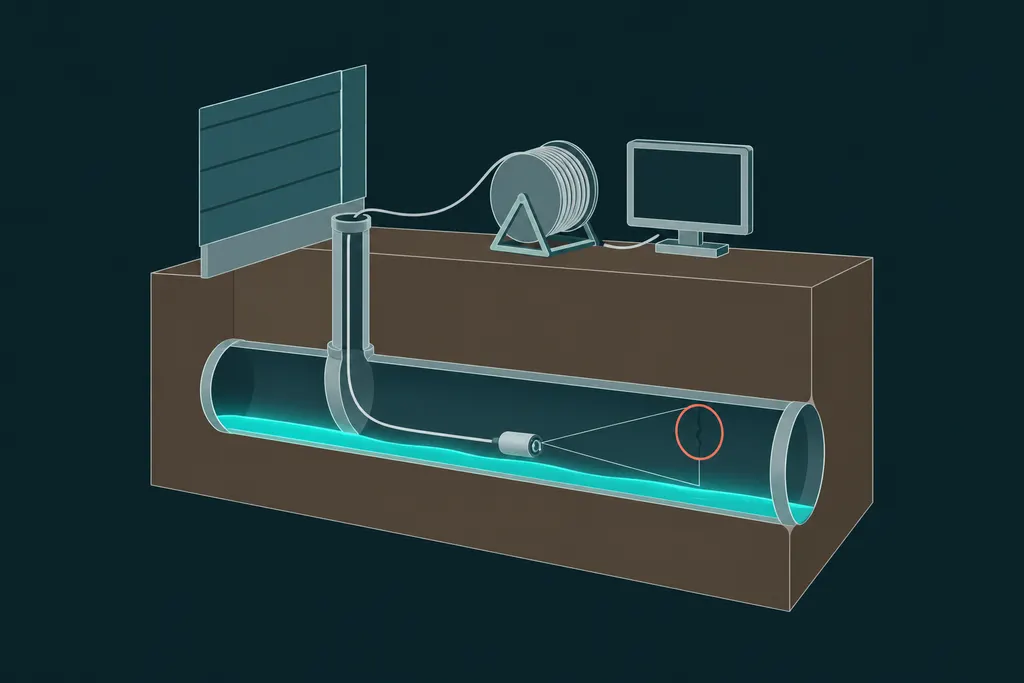
The plumber feeds a small camera on a flexible cable into the sewer line through a cleanout (or, if there isn’t one, through a toilet opening after removing the toilet) and watches live video on a monitor. HomeGuide says drain cameras have a built-in transmitter “so plumbers can pinpoint the exact location of the problem underground,” and that most inspections take about an hour.
What the camera can find, according to HomeGuide and Seattle Public Utilities:
- cracks, fractures and holes in the pipe wall;
- offset joints, where two sections don’t line up;
- sags or “bellies,” where debris settles in a low spot;
- tree roots growing through joints or cracks (more on roots);
- grease and debris buildup;
- in concrete pipe, exposed aggregate, which Seattle calls “a common and critical defect.”
Seattle grades each defect as needing no repair, routine inspection or cleaning, repair, or replacement. For example, a minor sag of less than 25% of the pipe diameter typically doesn’t cause problems, while severe exposed aggregate with holes should be replaced “as soon as discovered.” That grading is what turns a video into a decision.
The camera has limits. Seattle Public Utilities says cameras “cannot see under water,” so a line that is blocked and not draining usually needs to be cleared first; camera inspections “are most useful after the blockage has been cleared.” HomeGuide adds that a major blockage stops the camera from moving forward.
When a camera inspection is worth it
- Several drains are slow or backing up. This Old House says a main-line blockage is “the likely culprit” when multiple drains are clogged. Our Leak Finder walks through it.
- Before paying for a repair. This Old House’s Richard Trethewey recommends sending a camera down the line “before any work begins,” which can give a more accurate project estimate.
- After a root or clog clearing, to see the pipe’s condition and where future problems might turn up, as Seattle suggests.
- On a schedule. The sources differ: Seattle Public Utilities recommends at least every 8–10 years, and every 2–3 years with large trees or shrubs nearby; the San Francisco PUC says at least once every five years; This Old House says owners of older homes should do it at least once every 10 years.
Sewer scope before buying a house
A standard home inspection typically doesn’t include a sewer line camera inspection, HomeGuide says. Adding one costs $100–$250 and is recommended for homes older than 20 years, though not every home inspector offers it. Seattle Public Utilities puts it plainly: “When considering purchasing a home, have the side sewer inspected.”
This matters because in some cities the buyer takes on the pipe all the way to the public main. In Seattle, an owner owns the side sewer “to the public sewer main,” under the street; rules differ elsewhere, as our sewer line repair cost guide explains.
What to ask for: video, footage marks, written report
Before the inspection:
- Does the price include clearing the line if the camera can’t get through?
- Will you give me a copy of the video and a written report? HomeGuide lists both as questions to ask.
- If I hire you for the repair, does the inspection fee count toward it?
At the time of service, Seattle Public Utilities suggests getting answers in writing, with the provider’s signature and date:
- the probable cause of the blockage;
- if the line is rootered, the footage where the blockage was found, with the spot marked on the ground;
- a copy of the video, on a USB drive or as a link.
You can share your copy of the video with other contractors when you collect bids; ask whether they will quote from it. HomeGuide warns to “beware of companies charging a low cost for inspections but high rates for repairs,” and both HomeGuide and Seattle recommend getting at least three estimates. If the video points to a lining or pipe bursting job, see trenchless sewer repair cost.
Some cities will review your video or inspect their part of the line. Seattle Public Utilities offers to review “your side sewer scope video where the connection may be damaged.” In San Francisco, if a plumber’s inspection finds a problem in the lower lateral, between the curb and the main, that can’t be fixed with maintenance, the owner submits a service request and the SFPUC sends a crew to inspect it. In Portland, if the City says your line is leaking and you disagree, you can have a contractor video record the line and send it to the city’s Environmental Services for review.
Not sure where the water comes from?Run the Leak Finder →Sources
- HomeGuide — How Much Does a Sewer Camera Inspection Cost? (Dec 19, 2025)
- This Old House — How Much Does Sewer Line Replacement Cost? (updated Mar 30, 2026; cost data from Angi)
- This Old House — Sewer Line Repair and Replacement (updated Apr 10, 2026)
- Fixr — Cost to Unclog Main Sewer Line (updated Jan 31, 2025)
- Bob Vila — How Much Does Sewer Line Replacement Cost? (updated Jan 27, 2023; sources listed: Angi, HomeAdvisor, This Old House)
- Seattle Public Utilities — Taking Care of Your Sewer Pipe (PDF, undated; p. 2)
- Seattle Public Utilities — Side Sewer Repair Methods (accessed Oct 31, 2026)
- Seattle Public Utilities — Side Sewer Defects & Issues (accessed Oct 31, 2026)
- Seattle Public Utilities — Side Sewer Maintenance (accessed Oct 31, 2026)
- Seattle Public Utilities — Your Side Sewer (accessed Oct 31, 2026)
- San Francisco Public Utilities Commission — How to Take Care of Your Sewer Lateral (Mar 11, 2024)
- City of Portland — Broken Sewer and Drain Lines: Guide to Repairs, Permits and Inspections (accessed Oct 31, 2026)
Checked 2026-10-31
Illustrations on this page are AI-generated to help you picture the situation. They are not photos of real homes, jobs or people.